The visual quality of the light
To create good quality visual solutions, we at Fagerhult are constantly working to develop our optimisation methods.
A solution for every application
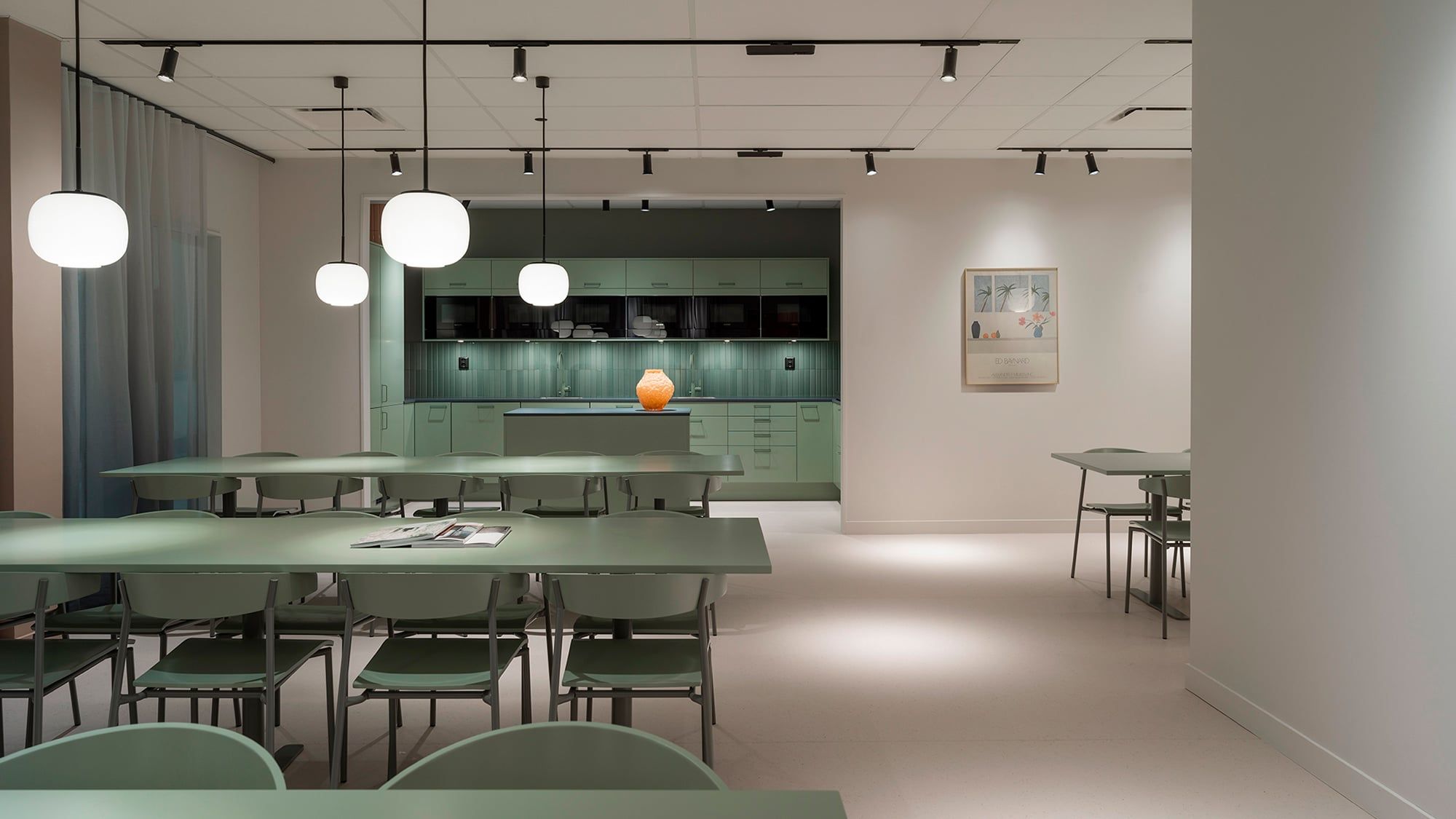
It is always important to tailor each solution to the specific application. However, a measure that solves one problem can cause another to arise, such as reduced efficiency, a negative impact on light distribution or an effect on average luminance and UGR. Several factors therefore need to be taken into account. It’s not uncommon to need to find a good compromise.
Light measurements provide us with valuable information about our luminaires. These are used to verify that light planning and requirements in line with standards are being met. We also measure the efficiency of the luminaires.
Key points to consider when evaluating visual quality (Light) include:
- The luminaire must be set to an appropriate light output.
- The luminaire must be installed in the manner in which it is intended to be used, for example:
- a recessed luminaire must be installed in a suspended ceiling
- a pendant luminaire must be positioned at an appropriate distance from a tabletop
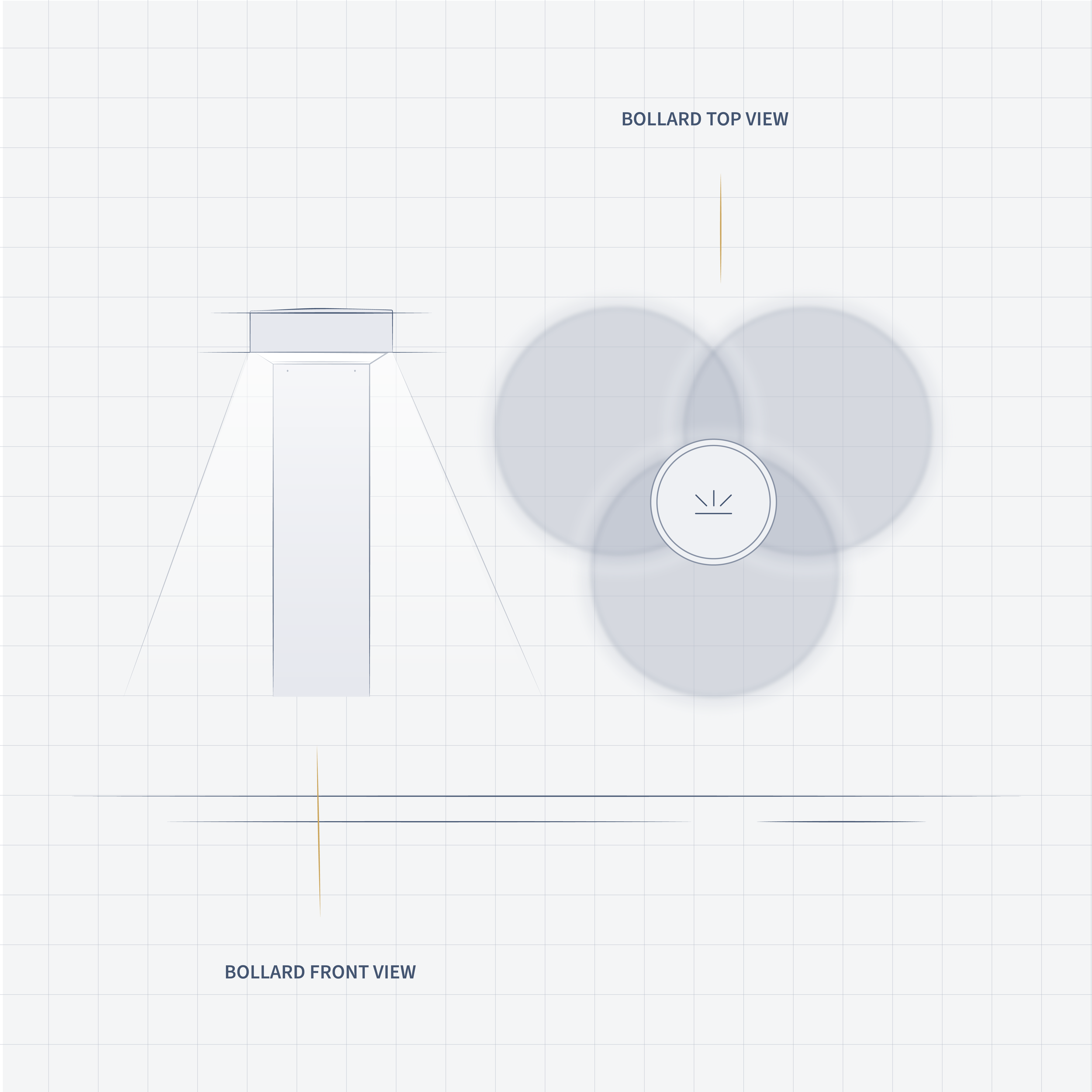
- a bollard must be installed at the correct height above the ground. - Will the luminaire be placed near a wall?
- Is the right surface being lit? Asphalt, industrial flooring, etc.?
Simulation
By simulating a visual problem, we can optimise the solution, minimise the problem and/or avoid it entirely. Simulation is an important tool in the development of our optics. However, it can never fully replace prototypes when it comes to ensuring high visual quality.
Examples of what we want to avoid include:
Undesired shadows
In the case of undesired shadows caused by the optics, the contrast between dark and bright areas needs to be improved. Possible measures include:
- Creating a more uniform light distribution by diffusing the light
- Increasing the number of light points/LEDs
- Optimising the optics to achieve a more homogeneous light pattern.
In most cases, a combination of these solutions is required to obtain an acceptable result.
Multiple shadows
In most applications, such as office applications, we want to avoid shadows cast by objects. If the spacing between LEDs is too large, each light point creates its own shadow, and the greater the distance, the more pronounced the contrast between the shadows becomes.
One way to avoid multiple shadows is by using a customised louvre, for example Beta Opti Nano. By adding several light points between each cell in the louvre, combined with a diffusing film and the design of the lamells, the occurrence of multiple shadows is minimised while maintaining good efficiency and glare control. Overall, this results in softer shadows and a more blended visual effect.
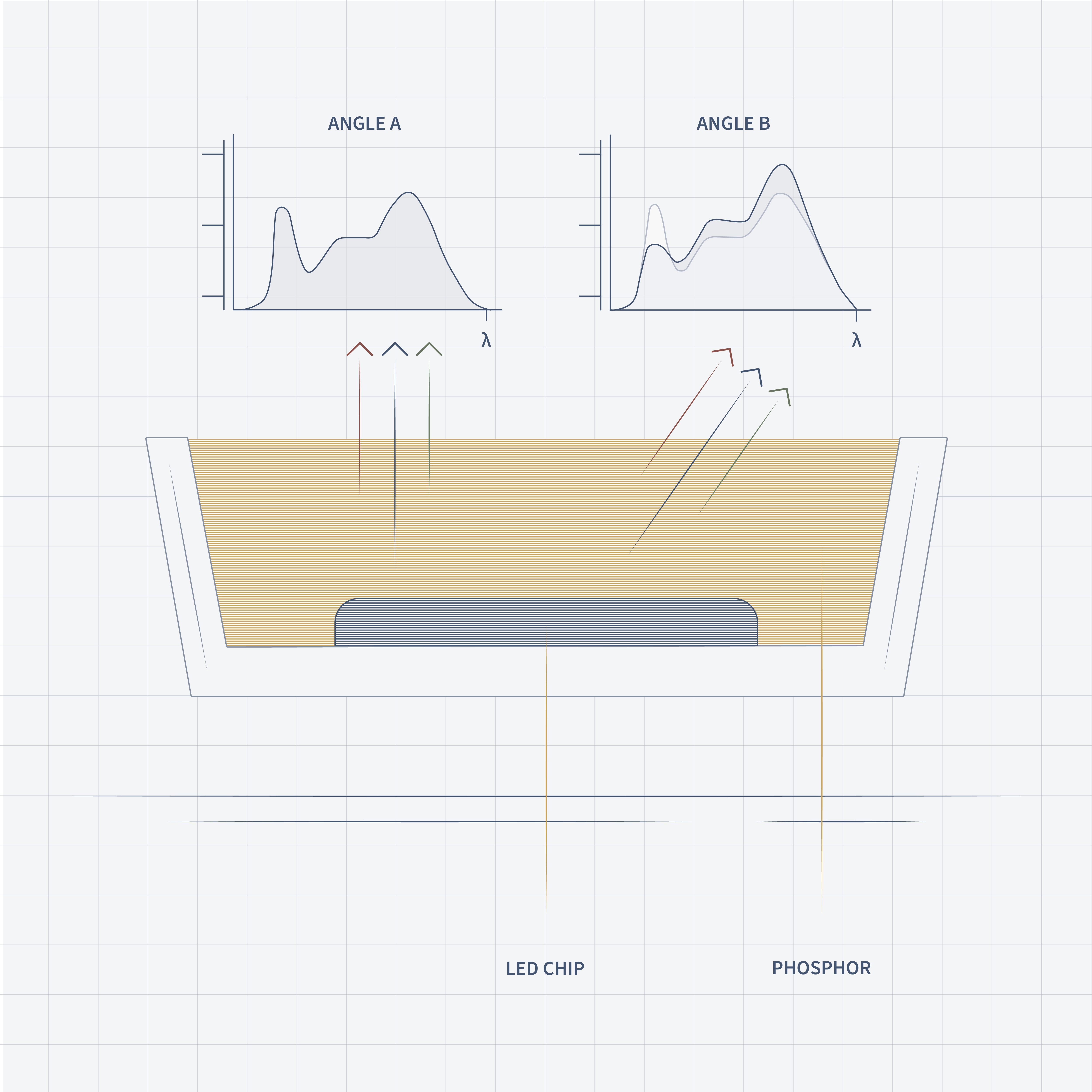
Color Over Angle (CoA)
With the introduction of LEDs came new challenges, such as Color Over Angle (CoA). This describes how the perceived color of a light source changes depending on the viewing angle.
The image on the left shows a schematic cross-section of an LED. The blue square represents the chip, where the light is generated, and it is blue in color. The yellow area is a phosphor layer that converts the blue light into a broader spectrum of colors, making it appear white to the human eye. Since the light travels different distances through the phosphor layer, its color varies with the emission angle. This can result in color shifts—such as yellow and blue tints—on surfaces that are intended to appear white.
An unevenly lit surface
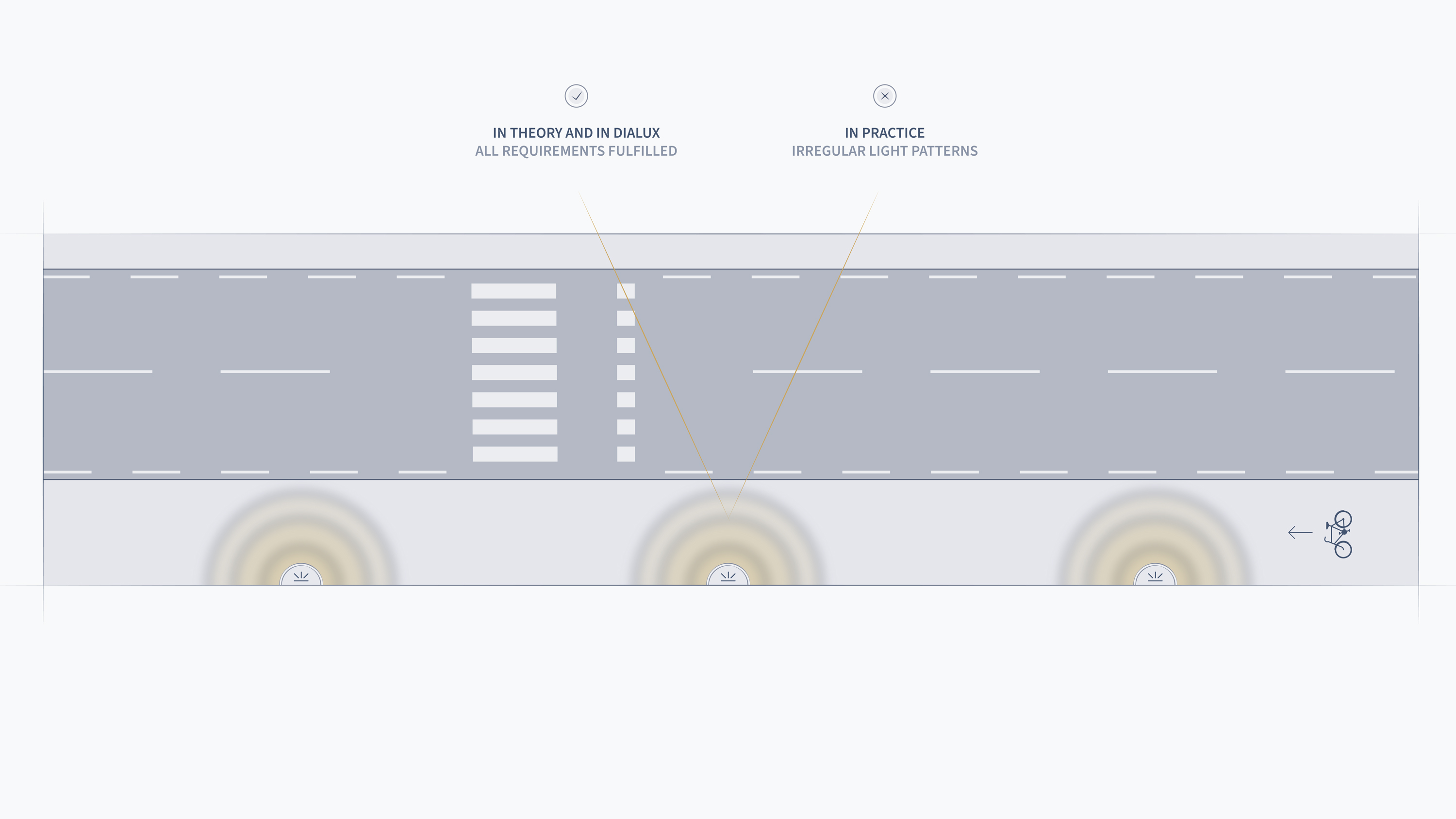
We want to avoid illuminated surfaces being unevenly lit, such as in the example below, where a bollard is causing irregular streaks of light. Even if all requirements are met in theory – and in Dialux – there may still be shortcomings in the visual expression. There are many ways to reduce this or prevent it from happening. For example, it is possible to soften the light distribution using diffuse films or surfaces.